
2026
A Harmless Mystery
I opened a ten-year-old document and found a draft of an email to a “Steve.” Through the years I’ve known dozens of Steves, including my dear friend Steve Cohen (“The Millionaires' Magician”), but I don’t recall who this Steve was.
Hi Steve,
I was watching a TV program and thought of you. Or, more accurately, I thought of the beautiful principle you champion: in business and in life, you should give to get, or give more than you could ever hope to get in return.
Apparently, the principle doesn’t work with humans only. I’ll explain.
The TV program was a BBC show, “Weird Wonders of the World,” and it profiled a girl from Seattle who had a bunch of clear, plastic carrying cases. Each case held dozens of small, bizarre curios: earrings, beads, metal nuts, screws, buttons, charms from necklaces, and so forth.
Why was she saving these odd things? Each was a gift from wild crows.
The girl put up feeders in her backyard, and she’d devotedly refill them with seeds and peanuts. When the crows swooped down she’d watch them and talk with them. She spent loving time with them.
After a while, these crows would reappear at the feeder with a trinket, which they’d drop near her before they’d eat. Over the years they’ve done this hundreds of times. (One returned the girl’s camera lens’ cover. Another gave her a crab claw.)
Crows apparently are one of the animal kingdom’s smartest creatures. They can use tools, and some tests show they’re smarter than dogs and cats.
The practice they are exhibiting is called “gifting.”
The young girl (at the time of the TV show she was 8; now I think she’s 13) gave to the birds without thought of remuneration, and they decided to repay her.
Anyway, I thought it might bring a smile. If you want to read about it and see photos, here’s a link to an Audubon article: www.audubon.org/news/seat…
All my very best,
Mark
What a strange and wonderful story. It feels like a modern fable, a small piece of magic in the everyday world. It reminds me of a quote I found years ago in a magic book from the 1970s, attributed to a Dr. Jurvis, whose identity is another mystery to me:
" . . . a harmless mystery, left unexplained, will add to the very meaning of life itself."
Perhaps the “why” of the crows' gifts is less important than the fact that they happened at all.
How to Talk About Your Business, So People Care
You’re talking about your business, and you’re seeing people’s eyes glaze over. You’re listing features, you’re explaining solutions, and nobody cares. Here’s the fix.
To make people care about your business, you first have to show them why you care. To connect with them you have to give them something real.
The Proud Moments Hack
Forget your elevator pitch for a second. Think about the work you do. What are three moments that genuinely made you proud? Not just hitting a sales target. I mean the real stuff:
-
That time your team pulled off a miracle.
-
When you truly helped a customer and saw the impact.
-
The big, ugly problem you helped solve.
These moments are where the magic is. They aren’t just bullet points on a resume; they’re the stories that show who you are and what you’re about. When you talk about them, you’re not a faceless company anymore. You’re a person with a purpose.
Your story is just as important as your product. People want to know who you are, how you got here, and what drives you. The more they get you, the more they’ll care.
Stop Pitching, Start Connecting
What I’m talking about here isn’t about bragging. It’s about being real. When you share a story that means something to you, you create a connection. You’re not just trying to sell something; you’re inviting them into your world.
Your proud moments are your most powerful tool. Use them in your pitches. In interviews. In your marketing. In every conversation.
So, the next time you talk about your business, drop the script. Start with a story that made you proud. Give them a reason to give a damn.
How to Create Ideas and Insights You Can't Find on the Internet or in AI
A note from the author, Mark Levy: I wrote this guide (I believe) in about 2010. In the age of AI, I find its method for generating original ideas more critical than ever. Here it is, lightly edited for today.
This list-making guide is a method for mining your own mind for experiences and insights that exist only there. These are the unique stories, forgotten connections, and nascent hypotheses that have not yet found their way into the world. Because they don’t exist on the internet, they cannot be found or replicated by generative AI.
This is why a manual, systematic ideation technique remains not just relevant, but essential for any thought leader. It is a process for unearthing the very raw material that will differentiate your work. What follows is the original guide. It’s a timeless method for looking at a topic from so many different angles that it becomes foreign to you, forcing you to see it anew and generate foundational ideas.
The Original Text: List-Making As a Tool of Thought Leadership
As a thought leader, you’re hired for your ideas. In a sense, your ideas are your inventory. They’re your currency. Bluntly stated: Your ideas equal money.
The right ideas form the basis of your consulting engagements, media appearances, books, articles, posts, and speeches. Your ideas get you noticed in the marketplace, help you command enviable fees, and enable you to do good work on projects of significance.
When your career is predicated on ideas, however, a complication arises: You cannot endlessly promote the same ideas. One reason is that, as the world changes, the effectiveness of your ideas can erode. A second reason is that the marketplace habituates to your ideas. Prospects think they know what you’re going to suggest, so they turn to other people who tout mystery strategies holding greater promise.
As a thought leader, it’s important that you refine or even restock your ideas periodically, so your brand stays distinct, you stay sought-after, and your business practice stays lucrative.
How, though, do you create standout ideas and intellectual property to add to your business? The ideation technique I’ve used with clients is one you’ve likely used all your life: list-making.
A list constructively narrows your focus. It’s a lens that forces you to ignore most of the world, so you can examine and make decisions about an isolated sliver. A list also coaxes unarticulated and half-remembered information from your brain, so you can better see, understand, and act upon the information.
As useful as list-making has been as a gathering-and-prioritizing device, its worth is amplified when you use it as a tool to produce insights and ideas.
List-Making for Ideation in a Nutshell
Next time you need new ideas, first consider your topic by making a list. Don’t make just one lone random list, though. No single list could give you a suitable view.
You want to look at your topic in a way that’s broad and, in a sense, disorienting. You want your topic to seem foreign to you, so as you study it, surprises, insights, and novel ideas emerge without much effort.
Instead of one list, create five-to-fifteen lists – each with its own focus. These lists would have names like, “What facts come to mind about the topic?,” “What stories come to mind about the topic?,” and “In what ways can I reframe the topic?”
Spread the lists out on a table, look from list to list and item to item, and ask yourself questions, like “What’s obvious here?” and “What’s surprising?”
Human beings are meaning-making machines. In a matter of moments, you’ll find yourself making unexpected connections and seeing unpredicted patterns. New meaning will appear to you, because of the curious vantage point afforded by the lists. You can then turn your latest ideas into “thought chunks,” which you can expand into products and services that support your thought leadership.
That was the nutshell version. Here is the same technique told in detail:
List-Making for Ideation in Detail
Step #1: Brainstorm a Master List
When you need fresh ideas on a topic, start by making an initial list. What type? A list of lists. You’re going to brainstorm the title of every list you could possibly make about your topic. Let’s call the paper you record these titles on your master list.
Some of the titles on your master list might sound generic, like you could use them to study virtually any topic:
- What do I know about (this topic)?
- What don’t I know about it?
- What are all the pieces I could divide it into?
- How can I reframe it?
- What are my assumptions about it?
- What are some facts?
- What stories about it come to mind?
- What images?
- What metaphors and analogies?
- What successes have I had in my work on it?
- What mistakes have I made?
- What excites me about it?
- What scares me?
- Who are the experts on this topic?
Other titles on your master list will be topic-dependent. For instance, if your topic is organizational culture change, some of the titles you could put on your master list include:
- How would an organization know if its culture is changing?
- Why do some culture changes succeed?
- What must an organization give up to change its culture?
- How do you measure the value of a culture change?
- What organizations have I worked with that have had a great culture?
In making your master list, don’t over-think it. Take a few minutes and jot down as many titles as you can, as fast as you can. When you’ve listed thirty titles or so, stop.
Step #2: Explore Your Topic Through Multiple Lists
Look over your master list, and pick a handful of lists you’d like to write. Maybe five, ten, or fifteen different ones. How do you know which titles to select? If an entry feels boring or unnecessary, pass it by. If an entry seems valuable, even if it’s for reasons you can’t explain, choose it. Your gut has its reasons.
Write the title of each chosen list at the top of its own page, and fill in those lists. You can fill in each list one at a time, or you can haphazardly jump back and forth among lists, jotting down items as they occur to you.
Step #3: Make Meaning From Your Fresh Vantage Point
Once you’ve finished filling in the lists, spread them on a table, shuffle them around, and look from list to list and item to item. Ask yourself questions about what you see. Questions like:
- What’s obvious?
- What haven’t I noticed before?
- What’s right? What’s wrong? What’s missing?
- What’s surprising?
- What’s useful?
- What patterns do I see?
- What’s this all adding up to?
By giving your lists time, attention, and curiosity, you’ll see your topic from a perspective that’s wide and uncommon. It’ll be like the first time you saw your hometown from the air. You’ll make fresh meaning from what you’re observing. You’ll notice connections between lists, spot associations among items, discover patterns, build hypotheses, recall stories, and formulate ideas.
While studying your lists, write down your thoughts on a pad as they hit you. Don’t limit yourself to notions elegant or weighty. Get everything down.
Step #4: Build an Inventory of New Thoughts
To finish your list-making ideation session, you need to convert your fragmentary notes into what I call, thought chunks. Doing so will give you a better handle on the ideas, and will help you store them for later use.
What is a thought chunk? It’s a piece of prose containing a complete thought. That prose piece may be a sentence or two or three long. It may even stretch into a couple of pages. Its length isn’t critical. What is important is this: If you read one of your thought chunks – even ten years from now – you’d understand what it meant instantly.
A chunk, then, is a time capsule you create for the future you.
For example, I was once working on ideas for elevator speeches. I scribbled the note “Talking about a movie.” Later, I expanded this into a full thought chunk:
“When looking for distinctions that would fit an elevator speech, most people freeze up. They think finding distinctions is a special skill. It’s not. Finding distinctions is no harder than talking about a movie. If a friend asked about a movie you’d recently seen, you wouldn’t hesitate until you found the perfect thing to say. Instead, you’d instinctively head for something distinctive: ‘It’s about a robot that travels back in time to protect its inventor,’ or ‘It’s the new Daniel Day-Lewis film.’ Finding engaging business facts to talk about in your business elevator speech is no different. It comes naturally if you let it.”
I’ve now captured that idea as a standalone thought chunk. Its meaning is clear and will remain so. I could use the idea now, or a decade from now. It’ll always be at the ready.
Finish your ideation session by converting all your ideas into chunks to store on your computer. You’re building an inventory of fresh ideas, observations, and stories.
Additional Notes from the Original
- Time: A quick session can be done in under an hour. A deeper dive might take three hours, perhaps broken up over several days.
- Revisit: Come back to your lists days or weeks later. Your fresh eyes will see a dozen connections that eluded you the first time.
- Group Work: This process can be adapted for group brainstorming. The group jointly follows the list-making process to solve one member’s problem.
- Organization: Once I’ve written up a thought chunk, I drop it into a separate document on my computer which holds similarly-themed chunks (e.g., “Positioning,” “Sales,” “Writing Technique”). This is far more effective than having ideas scattered across your hard drive. By saving and organizing chunks as you go, you’re tending your lawn regularly so it’s always thick and green.
Modernizing the Method: Tips for Today
The core of this technique is timeless, but the tools we use can make it even more powerful.
Use AI as a Brainstorming Partner. Stuck on your master list? Ask an AI assistant: “I’m trying to generate new ideas about [your topic]. What are 20 different lists I could make to explore this topic from unusual angles?” Use its suggestions as a starting point.
Create a Digital “Thought Chunk” Database. Instead of Word documents, use modern tools like Notion, Obsidian, or Roam Research. These allow you to tag, link, and instantly search your entire inventory of ideas. A simple tag like #thoughtchunk can make them all instantly accessible.
Use Voice-to-Text. Ideas often come at inconvenient times. Use a voice memo app on your phone to capture fleeting thoughts and raw ideas for your lists. You can transcribe them later, ensuring nothing gets lost.
Apply it to Social Media. This technique is perfect for generating a month’s worth of content. The items on your lists can become individual tweets. The connections between items can become LinkedIn posts. A fully developed thought chunk can become a thread or a short article.
Let AI Be Your Editor. Once you have a raw, powerful thought chunk born from your own experience, you can use AI to help refine it. Ask it to “clean up this prose,” “suggest three different headlines for this idea,” or “expand this into a short blog post, keeping the core message intact.”
Getting Started Today
Ready to try? Here’s a simplified guide.
First, Pick a Topic. Choose a subject you want to explore or a problem you need to solve.
Next, Brainstorm Your Master List. Spend 10 minutes writing down the titles of every possible list you could make about your topic. Don’t judge, just write.
Then, Choose and Create. Pick the 5-10 most interesting list titles and spend 20-30 minutes filling them out. Jump between them as ideas strike.
After that, Connect and Capture. Spread your lists out (digitally or physically). Look for patterns, surprises, and connections. Ask, “What’s the interesting thing here?” and write down your emerging ideas.
Finally, Create Your Thought Chunks. Take your best 3-5 ideas and write each one out as a complete “thought chunk.” Give it a clear title and save it in your new idea inventory.
In a world of content abundance, the new thought leadership is not about creating more content, but about creating different content. It’s about depth, originality, and a unique point of view. This method is a reliable engine for producing exactly that.
The Scary List Method
Leaders of mid-sized companies often ask me, “How can we get more clients?” It’s a good question, and it usually leads to a conversation about making two lists.
The first list is the one you’d expect. It’s a list of all the things you think you should be doing to amp up your biz dev: go to more conferences, ask for referrals, up your social media game. It’s the sensible, comfortable list.
Then there’s the second list. This one’s very different. It’s a list of things that scare you shitless.
Now, I’m not telling you to do any of these things. What’s terrifying and risky for one leader is a walk in the park for another leader. The specifics aren’t the point. But to give you a feel for it, the scary list might include things like:
*Firing your biggest, most time-consuming client.
*Doubling your prices overnight.
*Publishing your “secret sauce” for the world to see.
*Inviting your top three competitors to a private dinner to talk about the industry.
Again, these aren’t recommendations. You’re on your own to figure out what’s on your list. It’s not the specifics I want to hammer home. It’s the vibe. It’s the act of going towards what scares you. That’s the important part.
Why? Because the comfortable list, by its very nature, points you toward more of the same. It’s about optimizing the known. The scary list, on the other hand, points you towards growth and the unknown and the things that will force you and your organization to evolve.
Of course you needn’t do everything on your scary list. But you can’t ignore it. Your job is to always be seeding some of those ideas into your team’s biz dev. It’s a way of ensuring you don’t mistake comfort for strategy.
The Evidence of Expertise: A Workbook for Gathering the Facts That Make Your Brand Story Undeniable
Here’s the text of a workbook I wrote. It helps answer the questions: What’s your company done, and why should I trust you?
PREFACE: Why this workbook exists
Most professionals talk about what they believe. Fewer talk about what they can prove.
When a potential client asks, “Why should I choose you?”, they’re looking for evidence: real, specific, repeatable proof that you know what you’re doing and that the results you create aren’t random.
This workbook helps you gather that evidence. You’ll assemble a trail of facts, figures, and stories that prove your reliability, skill, and difference. Every number and every anecdote is a piece of your reputation made visible.
By answering these questions, you’ll build a library of proof points – your evidence of expertise. These ideas can go into your elevator speeches, marketing collateral, sales pitches, and so forth. Don’t feel pressured to complete every question. Some won’t apply to you. Fill out the ones that speak to you.
By the end, you’ll have something few companies ever take the time to create – a living record of credibility that reminds clients, and yourselves, why you’re worth trusting.
TIME AND SCALE
How long have you been doing this work?
What volume of work have you completed?
Across how many industries have you worked?
How many people have you served, directly or indirectly?
Where in the world have you worked?
REACH AND RELATIONSHIP
What recognizable names have trusted you?
What percentage of clients come back?
Which client has been with you the longest, and why?
On average, how long do client relationships last?
What measurable results have clients achieved because of you?
CREDIBILITY AND RECOGNITION
What certifications, licenses, or credentials verify your competence?
What awards or honors testify to quality?
What surveys or ratings confirm satisfaction?
Who endorses you—clients, associations, peers?
Where have your ideas appeared or been cited?
RESULTS AND IMPACT
How much money, time, or effort have you saved clients?
What processes or systems did you improve?
What problems consistently vanish after you’re involved?
What guarantees or promises back your work?
PEOPLE AND PRACTICE
What’s the average tenure of your team members?
What collective experience do they bring?
What training or education do you continually pursue?
What training do you give your clients so results stick?
What materials, technologies, or methods set you apart?
PARTNERSHIPS AND REPUTATION
What partnerships or alliances strengthen your credibility?
Where have your ideas appeared or been cited?
What recognitions, rankings, or listings reinforce your status?
Who outside your company speaks positively about you, and why?
Which client testimonials capture your difference in their own words?
RESEARCH AND INNOVATION
What research or proprietary data supports your approach?
What unique decision-making framework do you apply?
What new technology or tool have you created or customized?
What do you do that competitors rarely attempt?
What principle or method have you refined over years of trial?
STORIES THAT REVEAL CHARACTER
What do clients say you always deliver, regardless of project type?
What story perfectly embodies your defining quality?
What story best captures a moment of recovery – when you made a mistake right?
What story shows loyalty or partnership beyond the contract?
What story reveals your human side—humor, empathy, humility?
VALUES AND BELIEFS
What belief guides you when no one’s watching?
What do you refuse to compromise, even when it costs you?
What personal experience shaped your approach to this work?
What do you believe about your field that few others do?
What legacy do you want clients to associate with your name?
BUILDING YOUR COMPANY SCRIPT
From your library of answers, you can create a short, memorable script your entire company can share, word for word, with pride. Pull the data, facts, and stories that feel most alive. Circle or highlight the ones that sound distinctly like you – not any company, but yours.
Combine them into a confident statement. Think in sentences, not bullet points. Aim for something that sounds true when spoken aloud. It works because it’s not marketing fluff. It’s truth spoken clearly.
Try Before You Buy: The Power of a Sample
This is a strategy you’ve experienced many times. It’s been used on you. Maybe even today. You also may have used it on other people. But I’d hazard a guess you could be using it far more often than you do.
What is this powerful persuasion tool? Let’s call it “sampling.”
The Mr. Peanut Principle
When I was a child, my family took a trip to the boardwalk in Atlantic City. There, in front of the Planters Store, was a man dressed as Mr. Peanut. He was seven feet tall and freaked me out.
Now, Mr. Peanut was standing there, handing out an item. What item?
He wasn’t handing out a Mr. Peanut t-shirt or a Mr. Peanut beach towel. He wasn’t handing out a white paper extolling the nutritional virtue of peanuts.
No, Mr. Peanut was handing out tiny paper bags, each holding seven roasted cashews. Why?
The reason was simple: Planters figured, if you enjoy these seven cashews, you’re in luck. Inside the store right there are pounds and pounds of the very same item. If you like these seven cashews, you’re going to want to go into the store, because you can buy more in there. If you hate these seven cashews, though, you’d better stay out of the store, because there are pounds and pounds of the same item in there, and you’re going to hate it inside.
To me, the Planters strategy was all about ethical persuasion, because there was no separation between the item for sale and the method used to sell that item. They were one and the same. Before buying the item, you could test the item.
To persuade, you need to give people a free or low-cost sample of the thing itself. Or you need to give something as close as possible to the thing itself.
This is true whether what you’re pitching is a product, a service, or an action you’d like an employee to take. You’ve got to ask yourself, “How can the other person try what I’m suggesting in a small, safe way before they fully commit?”
Why Sampling Works
Why is sampling necessary? It’s because of you. People are scared of you. They don’t trust you. They think you might have a hidden agenda. That, or they think you’re aboveboard, but you’re deluded and can’t deliver on what you say you can deliver. Or, what you’re promising won’t work for them.
A sample knocks down those barriers. For the other person, it removes risk. A sample is an principled way of saying, “Don’t guess. Try it. Then decide.”
Sampling in the Digital Age
When you think about sampling, the first thing you probably think of is product samples. We’re inundated with product samples. In the digital age, this has only accelerated.
Streaming Services: Think about Netflix, Hulu, or Disney+. They all offer free trials so you can binge-watch their original content before committing to a monthly subscription.
SaaS (Software as a Service): Most SaaS companies offer a “freemium” model or a limited-time free trial. You can use the basic features of the software for free, and if you want the “professional version” with all the bells and whistles, you can upgrade to a paid plan.
E-commerce: Companies like Warby Parker will mail you five pairs of glasses to try on at home. You keep the ones you like and send the rest back, free of charge. This takes the risk out of buying something as personal as glasses online.
These are all examples of product samples, but you can sample services and even experiences.
Sampling Beyond Products
Coaching and Consulting: Want to hire an executive coach? Instead of committing to a year-long contract, ask for a free 20-minute introductory session to see if the chemistry is right.
Organizational Change: Rolling out a massive, organization-wide change? Don’t do it all at once. Start with a pilot project in one department or team to test the waters and work out the kinks.
Parenting 101: I once heard a story about a school that used sampling to teach teenagers about the responsibilities of parenthood. They gave each student a simulated baby—a doll with a computer inside that would cry at random times and need to be “fed” in the middle of the night. The students had to care for the “baby” for a few days, giving them a very real sample of what it’s like to have a child.
How to Use Sampling
So, how do you put sampling to work for you?
Think about the outcome you’re looking for, and then brainstorm ways to let people experience a small piece of that outcome.
Let’s say you’re a leader and one of your team members is stuck in a rut. Their thinking is stale, and they keep using the same old approaches to problem-solving. You want them to be more innovative, but just telling them to “be more innovative” is a recipe for disaster. It’s too big of an ask. So, you want them to sample what it’s like to think differently.
You could ask, “What’s something small that, just for tomorrow, might help you see things differently?” They might say, “I feel stymied working in my office day after day, staring at the same walls, getting interrupted constantly. If I could do my work in a different environment, that might help me think differently.” You ask, “What’s an environment you suspect might work?” They say, “The coffee shop across town.”
This isn’t some grand leap into innovation, but it’s a start. It’s a taste. You say, “Great. This afternoon, I’d like you to take your laptop and do your work in the coffee shop. See if a new environment changes your thinking at all. Tomorrow morning, stop by my office and we’ll talk about how it went.”
Eureka! They’re now going to go off and sample a new behavior and mindset. They’re not being forced into it. They’re not being coerced. They needn’t buy into it whole hog. Because of that, they’re much more likely to give it a chance, because for them the risk has been reduced.
Your Turn
Now it’s your turn. How are you going to make sampling work for you? Whether you’re in sales, marketing, IT, or a leadership position, think about something important that has to happen, and think of ways that you can give people a sample of the thing itself before they have to buy in. They’ll be much more likely to want to purchase what you’re selling, whether it’s a product, a service, or an idea.
Selling On Truth
A few years ago, my wife and I were in the market for a generator for our house. We had a sales representative from a local firm come over to assess our property. As it turned out, the representative and his father co-owned the company. While he was surveying the land to find a suitable spot for the generator, he asked me what I did for a living.
“I’m a business strategist,” I told him, “but a specific kind. I’m a differentiation expert. I help companies find the idea that’ll make them stand out as different and important when compared to their competitors.”
This piqued his interest, and he asked if he could pick my brain. He started a small side-business selling homegrown hops to local craft breweries and was struggling to find a way to make his product stand out.
When I first asked him why craft breweries would buy his hops, he said it was because they were the best tasting. I thought, “OK, that’s a claim. We can’t use that. Anyone can say that. Also, these breweries already have suppliers with good tasting hops. He’ll need a strong reason to get them to switch from their current sources.”
So, I asked him a different, simpler question: “Why did you start this business?”
His answer was the key. It began as a way to bond with his six-year-old daughter.
He lived on a large farm, and by the time he got home from work, there was little time to play or find projects they could do together. So, he set aside an acre of land to teach her about farming. They decided on hops, a crop that grows quickly and easily. They planted a hundred-foot row, and his daughter loved the experience, watering the plants with her little pink watering can. They planted a second row, and then a third. When it came time for the harvest, he brewed beer with the hops and gave it to his neighbors. Soon after, he and his wife had a second daughter, who also joined in, spending time with her father and older sister on the farm.
I asked him about the farm itself. He explained that it was a 300-acre property that had been in his family for three generations, passed down from his grandfather to his father, and now to him.
“There’s your differentiation,” I said.
I explained to him that many craft breweries are family-run businesses. Even those that aren’t often have a deep connection to their community and the art of brewing. His story would resonate with them. I laid out the narrative he should share:
‘I live on a 300-acre farm. It was my grandfather’s, then my father’s, and now it’s mine. About seven years ago, I put aside an acre to teach my young daughter, Madison, about farming and to have a way to bond with her. We decided to grow hops since they grow tall and quickly. We planted a hundred-foot row. Madison so loved working with me, watering the hops with her little pink watering can and watching them grow, that we planted a second row and a third. When we harvested the crop, I’d brew beer and give it to my neighbors. Madison doesn’t really understand what beer is, she’s never had a sip, but she loves growing the hops with her dad and visiting the neighbors, and giving them the beer as a gift. They so love it that I decided to start a business. My wife and I have a second daughter now, and this gives us a way to work together out in the elements and bond and learn about the family farm."
I advised him to share this story in his conversations with potential clients. I suggested he put it on a website with photos of his family on the farm. I also recommended he create a PDF of the story to send to breweries before meeting with them.
In a world of polished marketing messages and carefully crafted brand identities, the simple, unvarnished truth can be the most powerful differentiator of all. Your story, in its most authentic form, is your sale.
The Box That Didn't Care What I Thought
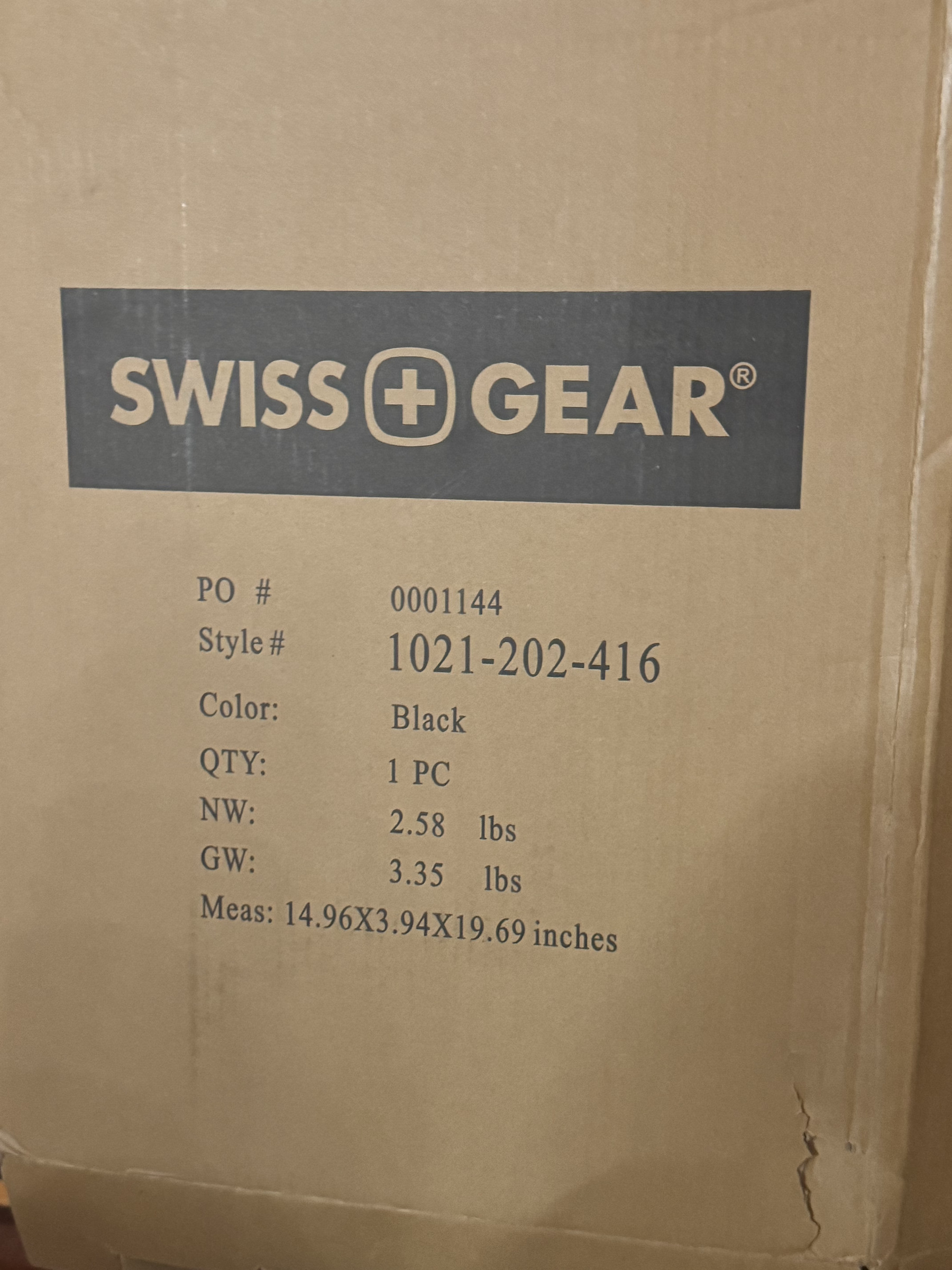
For Christmas, my wife bought me a SwissGear backpack. Before I even took the backpack out, its box caught my attention. Not because it was attractive or clever, but because it was aggressively uninterested in me.
Printed on one side of the box were the familiar details of logistics: PO number. Ten-digit style number. Quantity. Net weight. Gross weight. Measurements to the second decimal place. It was inventory and warehouse language, pure and simple. I could almost hear the beep-beep-beep of a tractor-trailer backing up to a loading dock, ready to off-load skids.
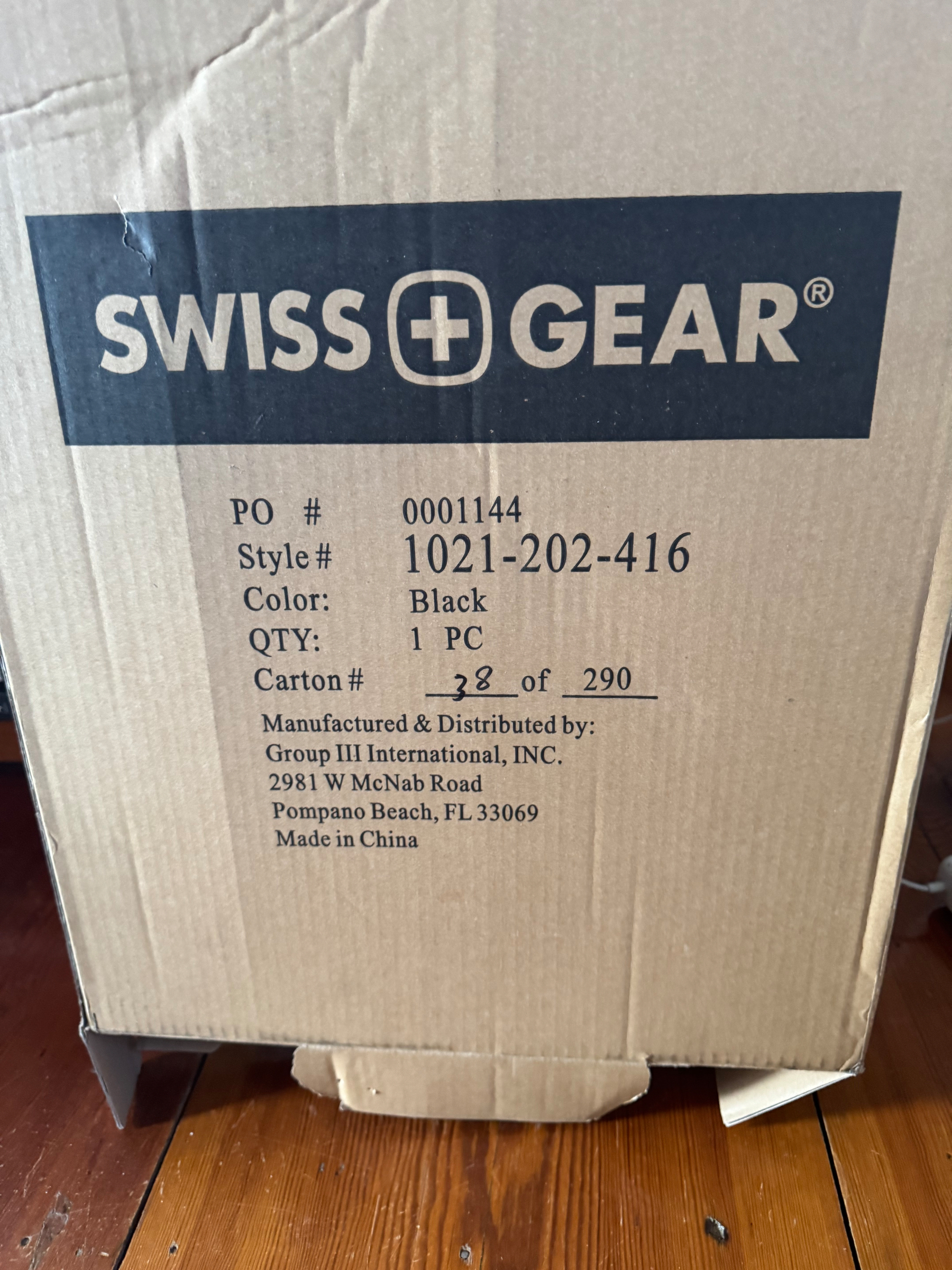
But then I turned the box over and found a subtle, yet profound, variation. While most of the information was identical – the PO number, the style, the color – the weight details were replaced with something else: “Carton # ___ of ____.”
This wasn’t just a blank space. The second number, 290, was printed, a clear indicator of a vast shipment. But the first number, 38, was handwritten in black marker. A distinctly human touch on an otherwise sterile container.
This small detail amplified the box’s core message. The box wasn’t telling a story; it was refusing to tell one. The handwritten “38” wasn’t for me, the end consumer. It was a mark of process, a note from one part of the system to another. It conveyed an even greater, more fascinating indifference. It was as if a worker on the line noticed something, made a mark, but the line never stopped moving. The system acknowledged a human was there, but only as another functional part of the machine.
The message the box conveyed was blunt: this is one unit in a system. This is carton 38 out of 290. The system does not care whether you’re paying attention. It will work anyway.
If you take that posture seriously, it starts to imply something more specific. SwissGear isn’t saying, “Look how carefully this was made.” They’re saying, “Here is one unit moving through a machine designed to handle millions of units without drama.”
And oddly, that restraint—that raw, unadorned display of process—creates confidence.
Which raises a harder question. If someone stripped away your company’s language and left only the system underneath, would it hold up? Or are words doing more of the work than the machinery beneath them ever could?
Why Samuel Adams’ “Illegal” Beer Isn’t a Mistake
Recently, Samuel Adams released the latest version of its Utopias beer, a limited edition that clocks in at roughly 30 percent alcohol by volume – about four to five times the alcohol content of a conventional beer.
Utopias is sold in a ceramic bottle for around $240, is produced in very small quantities, and is illegal to sell in roughly fifteen U.S. states because of its elevated alcohol content.
At first glance, that looks like a business error. A third of the country can’t legally buy your product? A conventional strategist might reasonably ask, “What were they thinking?” But that reaction misunderstands the logic.
Samuel Adams has been releasing versions of Utopias every couple of years since the early 2000s, and with each release the alcohol content has increased. That escalation isn’t accidental. It’s the strategy. Making a beer so strong that it crosses legal thresholds isn’t a regulatory problem to be managed.
It’s the story.
Once the bottles sell out, which they reliably do, the effect lingers. People who will never taste the beer still carry the association. Samuel Adams makes a beer so extreme it’s banned in parts of the country! That idea lasts far longer than any campaign.
What counts here isn’t shock value. It’s which part of the product the brand chooses to push.
Beer is, at bottom, about alcohol. Sure, taste, craft, and ritual all play a role. But people buy beer because it does something to them. When Samuel Adams cranks the alcohol up, they’re not bolting on a gimmick. They’re leaning hard into the very reason beer exists.
That’s why this strategy works.
If the oddity were incidental, it would feel wrong. Imagine Samuel Adams releasing a beer bottle that dissolves after opening, or one with a label made of sandpaper, or a cap that requires special tools. Those might be memorable, but they’d be arbitrary. They wouldn’t deepen what beer is for. They’d pull attention away.
That difference shows up in plenty of other products as well.
Strong positioning pushes harder on the thing the product already does for people. Weak positioning adds drama somewhere else and hopes it sticks.
Once you see that, the pattern is easy to spot. With beer, you push alcohol. With coffee, alertness. With air conditioning, cold delivered fast. With a hotel, rest or silence. With consulting, resolution. With software, speed or focus. The principle is the same every time: exaggerate the reason the product exists, not the decoration around it.
Many companies push what’s easiest to dramatize rather than what actually defines them. They ask, “What will get attention?” instead of, “What is this business truly for?”
If you’re going to push something to the edge, push the reason the product exists. Do that, and even the people who opt out will understand what you stand for.
Five Questions to Test If Your Strategy Is Real
What follows is a short diagnostic to help you tell whether your strategy has crossed that line, from something people understand intellectually to something they can actually recognize in their day-to-day work.
A Strategy Recognition Test
Answer these questions honestly and without overthinking them. If you find yourself hesitating, that hesitation is useful information.
- Can someone describe the strategy without using your words?
If people repeat leadership language verbatim, it often signals compliance rather than understanding. The real question is whether they can translate the strategy into their own terms.
A simple test is to ask a few people in different roles to explain the strategy to someone outside the organization. If their explanation collapses into abstractions or jargon, the strategy hasn’t yet entered their thinking in a usable way.
- Where can someone experience the strategy today?
This isn’t about hearing a description of the strategy. It’s about encountering it in action.
Is there a pilot team, a prototype process, a changed customer interaction, or a part of the organization where the future state is already operating, even in a limited form? If there’s no place where someone can see the strategy being lived, you’re asking people to move toward something they can’t yet recognize.
- What familiar behavior does the strategy amplify?
Effective change rarely starts from zero. It usually builds on something people already value or do well.
What existing habit, value, or behavior does the strategy make more visible, easier, or more frequent? If the strategy requires people to abandon everything they know and start over, it’s likely to stall. Change needs an anchor in what already feels familiar.
- Who has already lived the future?
This isn’t about who approved the strategy or endorsed it in principle. It’s about who has actually operated under the new model long enough to speak from experience.
If no one can point to firsthand experience, the rollout is asking for belief rather than providing evidence. Leaders don’t need to demand trust when they can offer proof.
- What would still look different if the strategy were ignored?
This question combines two important tests.
First, if someone asked, “What has changed?”, what would people point to? Real change shows up in concrete things: decisions made differently, behaviors that have shifted, moments that stand out. If the answers are slides, slogans, or meetings, the strategy hasn’t yet crossed into daily work.
Second, imagine a new hire joining tomorrow who pays no attention to the strategy deck. What would they still notice was different about how work gets done? If the honest answer is “not much,” then the strategy hasn’t yet altered the environment.
Until the environment changes, behavior usually won’t.
The Telling Conclusion
Most strategies don’t fail because the direction was wrong. They fail because people didn’t know what it meant for them, day to day.
If even one of these questions made you uneasy, that’s useful. It points to where attention is needed next.
The Strategy Was There. They Just Didn’t See It.
I don’t know if the story you’re about to read is literally true. It may be a business parable that’s been passed around long enough to feel historical. I’ve seen versions of it attributed to Arie de Geus, and I was reminded of it while rereading “The Art of the Long View” by Peter Schwartz.
Whether it’s fact or fable, the point it makes still holds.
In the early twentieth century, a group of British scientists encountered a tribe on the Malaysian Peninsula that had little contact with the modern world. The tribe was so isolated that it had yet to invent the wheel. The scientists invited the tribe’s chief to travel with them to the nearest modern city, Singapore, so he could see the latest wonders.
For a day, they showed the chief what they assumed would be astonishing: tall buildings, elevators, electric lights, locomotives, machines. Then they brought him back to his village.
When they asked what had made the biggest impression, the chief didn’t mention the buildings or the locomotives or electricity. Instead, he said he’d seen a man carrying more bananas than anyone in his tribe could carry. How? The man from the city was carting a pile of bananas in a wheelbarrow.
The key to the story isn’t the wheelbarrow, however. It’s the bananas.
The chief already had a mental category for bananas. His civilization had bananas. He could relate to gathering them, carrying them, needing them. The wheelbarrow made sense because it amplified something he understood already. The rest of the city, electricity, locomotives, infrastructure, fell outside his field of experience. It was as if they hadn’t been there at all.
We don’t see what we’re not prepared to see. This is where most strategy rollouts go wrong.
Leaders assume that if they explain the strategy clearly enough, people will get it. They build PowerPoint decks, write memos, hold town halls. They describe the future in words and diagrams, then wonder why nothing changes.
What’s actually happening is simpler and more uncomfortable. The strategy lives outside people’s existing conceptual categories. So it doesn’t register. It isn’t debated or resisted. They just don’t see it. People can’t move toward a future they can’t recognize.
That’s why one used car dealership transformation worked when so many don’t.
I first came across this example in writing by Larry Johnson. A son inherited his father’s car dealership, a classic hard-sell operation where customers were treated as transactions to close. The son hated that “Always Be Closing” model. He wanted to shift the entire business to a human-friendly, customer-first approach.
He didn’t start by rewriting the strategy or lecturing the staff. Instead, he sent his managers to customer experience training run by the Ritz-Carlton. The managers came back changed. They had experienced a completely different operating model. They had seen what customer-first looked like when it was real, not aspirational. When they returned, implementing the strategy became dramatically easier, because people weren’t being asked to imagine a future. They had visited it.
This is the real work of strategy rollout.
If you want people to adopt a new strategy, you have to help them see it, not just hear about it. That might mean a pilot project, a prototype, a shadowing experience, a visit to another organization, or a lived demonstration of the future state.
This isn’t about motivation or compliance. It’s about preparation. Until people have a mental handle for the new direction, the strategy goes by like electric lights and locomotives. Not actively shunned. Just unseen.
If You Can't be Named, You Won't be Called
Years ago, I wanted to write for the Sunday New York Times Book Review. An editor there liked my writing and offered to give me a chance. On the phone, he asked what kind of books I reviewed.
I thought the honest answer would impress him. I had been a director at a large book wholesaler, and had helped them sell over a billion dollars’ worth of books. As a part of my job, then, I had a working knowledge of nearly every book on the market.
So I said, “I review any type of book.” I was waiting for excitement. Maybe even awe. Instead, there was a pause.
Then the editor spoke to me with great sarcasm, slowly, as if I were four years old: “Mark, I have an index card here with your name and address on it. There’s a spot at the top for me to write the type of book you review. If I write ‘Reviews any type of book,’ I will never call you. Do you know why?” I didn’t.
“Because publishers don’t publish books in the category of ‘Any type of book.’”
At least I was quick on the uptake. I asked him what kinds of books he had the fewest reviewers for.
He paused, gathering a list in his head. “Sports and . . . “
“Stop,” I said. “I review sports books.”
And just like that, the totality of me was reduced to one thing. Sports books. Not because it captured everything I knew, but because it fit on the card. It gave him a reason to remember me and a reason to call.
Once you notice this kind of reduction, you see it everywhere.
The other day, I was in a pizza place. A waitress was talking to a woman about a former boyfriend. She referred to him as “the lasagna guy.” Later, two customers nearby were talking. One mentioned his son and called him “a baseball kid.”
This is how people think and talk in the wild.
The full complexity of the boyfriend was compressed into his love of lasagna. The entire inner life of the boy was shrunk down to baseball. There was no cruelty in it. No nuance either. Just fast shorthand.
This is how buyers think, too.
They don’t slowly assemble a complete picture of your company, or hold your full range of capabilities in their heads. They grab the first usable handle they can find, and they use that to decide whether you’re relevant and worth another conversation.
Understand that I’m not arguing for reduction as a virtue. All I’m say is reduction happens whether you like it or not.
Which is why the distinction between pigeonholing and positioning is important.
Pigeonholing is what happens when someone else does the reducing for you. Positioning is when you decide, in advance, which reduction you’re willing to live with.
The mistake I made with the Book Review was thinking that breadth was impressive. In business, breadth is usually invisible. Specificity is what gets you called back.
Good positioning doesn’t try to describe everything you do. It chooses the thing people can name. The thing they can repeat to a colleague. The thing that fits on the metaphorical index card.
Clear Enough to Obey
Before Richard Webster became one of the most prolific writers alive, with well over a hundred books to his name, almost all of them written long before AI was even a rumor, he was something else entirely: a magician and mind reader from New Zealand who wanted to be a writer and had written very little.
Webster admired many authors, but he was especially awed by “Call of the Wild” writer Jack London. Not just London’s stories, but his literary output. London died at forty and, in that short life, produced dozens of books along with hundreds of short stories, essays, and articles. The sheer volume felt almost superhuman.
On an early trip to the United States, Webster made a pilgrimage to London’s home in California. On the wall hung a list of London’s rules of work. One of them was brutally plain: write one thousand words a day.
Webster did the math. Follow that instruction and you could finish a book in a couple of months. Keep going and you could write several books a year. When he returned to New Zealand, though, something noteworthy happened.
Webster had misremembered the rule. Instead of writing a thousand words a day, he began writing two thousand words a day, day after day after day.
When Webster discovered his mistake decades later, it was irrelevant. His misremembered two thousand words a day rule had already turned him into a literary machine.
What made it work was not precision. It was that the instruction was clear enough to obey. It was something Webster could execute even on bad days, when inspiration failed him. Following the instruction didn’t promise greatness. Rather, it gave him direction and forward motion.
That’s also why people love challenges and games. They remove ambiguity. They replace “What should I do?” with “Just do this.”
I’ve run into the same principle in a very different corner of my life. I spend time visiting abandoned buildings, forgotten memorials, and historical oddities, places that often take real effort to reach and offer very little at first glance. On one trip, I drove deep into the New Jersey Pine Barrens to find a small monument marking the crash site of Emilio Carranza.
Carranza died in 1928 at the age of twenty-two. In Mexico, he was already a national hero. That year, he flew nonstop from Mexico City to Washington, D.C., as a symbolic gesture of goodwill between the two countries. After meeting with Calvin Coolidge among others, Carranza began the return flight south. He never made it. His plane was caught in a violent nighttime storm and went down in the Pine Barrens’ dense forest.
After hours of driving and searching, I finally reached the monument site. Yet when I got there, I felt almost nothing emotionally. There was no click. I looked around for a few minutes and was ready to leave. The place seemed quiet and unremarkable.
Then I reminded myself of a rule I use deliberately in moments like this. I say to myself: “Mark, at some point you thought coming here would be worth it. Why did you think that? Assume you were right. What did you know then that you’ve forgotten now?”
So I stayed. I studied the monument and the surrounding trees more closely. I pulled out my phone and began researching details prompted by what I was seeing rather than what I already knew.
I learned that Carranza had taken off from Garden City, that when his body was recovered a flashlight was fused into his hand, suggesting he had been flying low over the treetops, trying to find a place for an emergency landing in an aircraft not designed for night or weather. I learned that schoolchildren in Mexico had pooled their money to help fund the memorial in a remote corner of the New Jersey woods.
Only then did the place begin to feel meaningful.
I think about that moment when I’m tempted to leave too early, whether it’s a place, a piece of writing, or a line of thought. Not everything rewards assiduous attention. But some things do, if you stay just a little longer than feels comfortable.
Webster had an instruction that was clear enough to obey. So did I. Neither instruction was elegant. Both helped us get the job done.